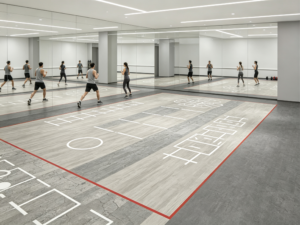
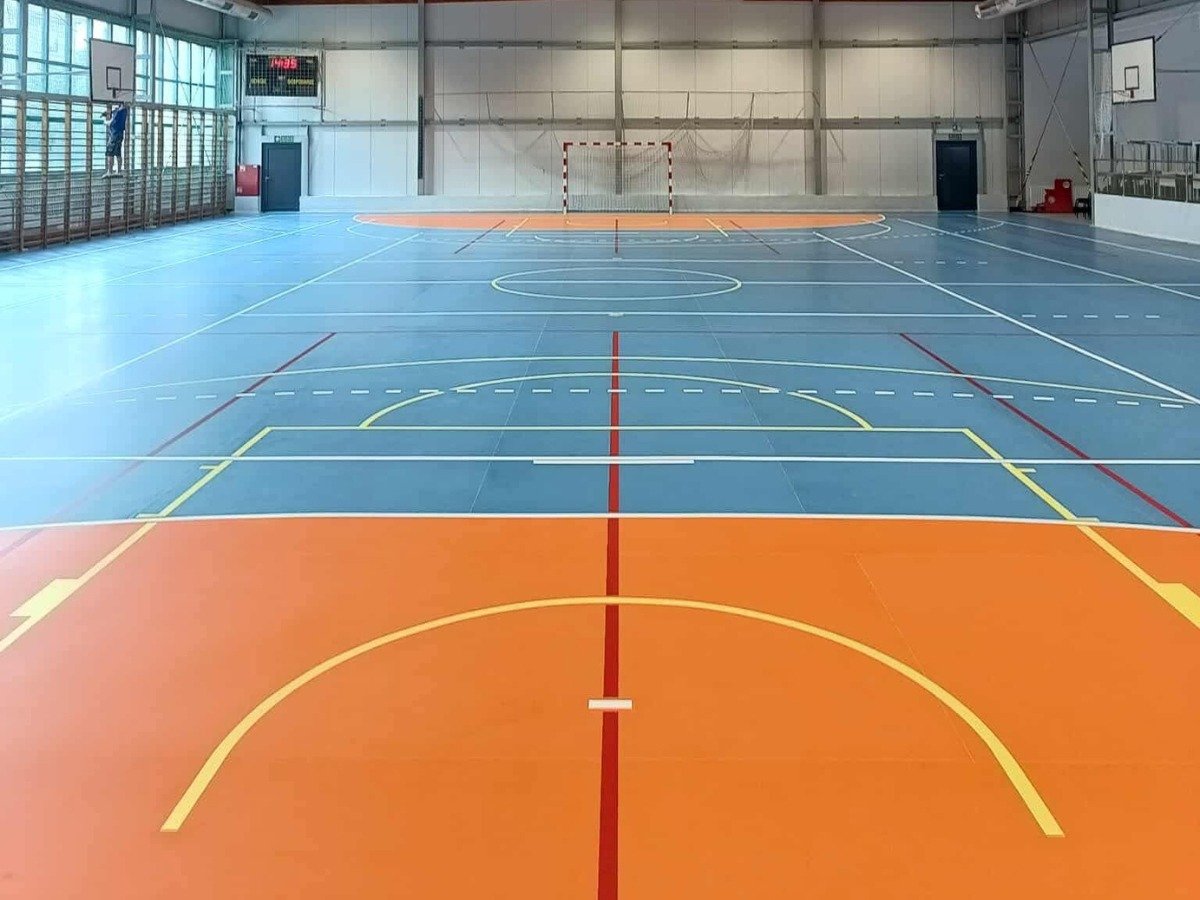
For gym owners, contractors, and sports facility managers, choosing a floor is a long-term investment. The market offers many options, but few people understand how production quality affects daily performance. This article dives into the chemistry and engineering behind sports flooring, answering the three most common buyer questions: What are the disadvantages of PVC flooring?, Are PVC floors good?, and What is sports vinyl flooring?
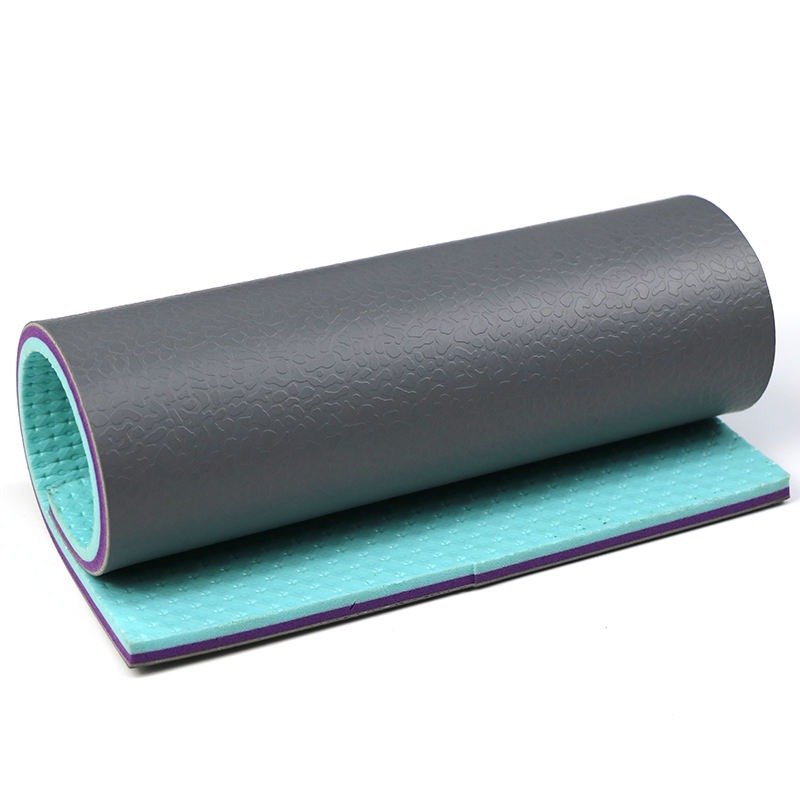
What is Sports Vinyl Flooring?
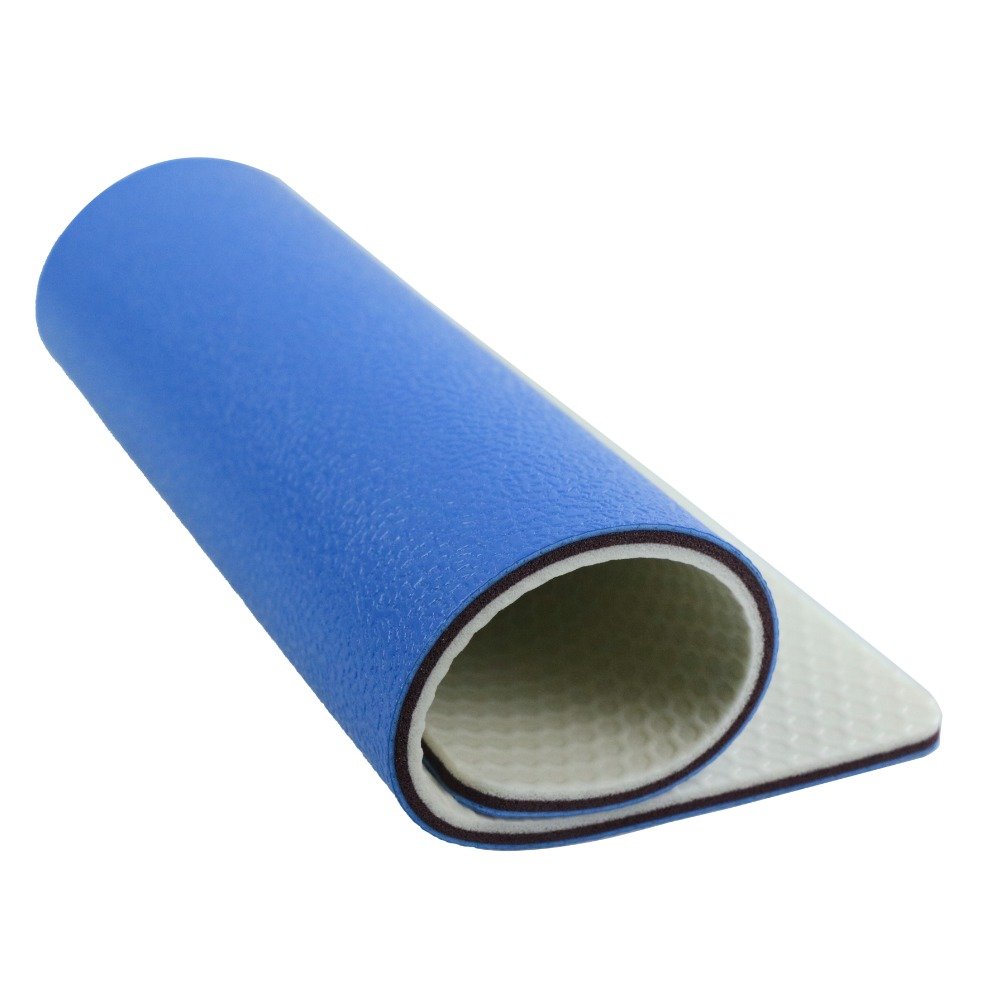
Sports vinyl flooring is a specialized category of resilient flooring designed to handle athletic loads—running, jumping, sliding, and equipment drops. Unlike residential vinyl, it consists of four distinct layers: a UV-cured wear layer, a transparent film layer, a printed design layer, and a foam or solid PVC backing. High-end versions add a fiberglass grid between layers to prevent stretching.
This construction allows the floor to provide controlled friction (not too slippery, not too sticky) and shock absorption (measured in % of force reduction). Whether you are installing a badminton court or a multi-use school gym, sports vinyl flooring offers consistency that painted concrete or loose sports floor mats cannot match.
The Disadvantages of PVC Flooring
While widely used, PVC (polyvinyl chloride) has inherent weaknesses. Understanding these helps you avoid low-quality products.
1. Plasticizer Leaching (The Sticky Floor Syndrome)
PVC is naturally rigid. To make it flexible for sports floor mats and roll-out courts, manufacturers add plasticizers (often phthalates). Over time, heat, humidity, and cleaning chemicals cause these plasticizers to migrate to the surface. The result: a sticky, tacky floor that traps dirt and becomes impossible to clean. In the sports floor middle east region, where indoor temperatures can exceed 40°C, this problem appears within 18 months on cheap floors.
2. Poor UV Resistance
Standard PVC yellows and becomes brittle under sunlight. If your facility has skylights or windows, unprotected PVC will degrade. The wear layer cracks, and the printed design fades. This is why reputable sports flooring manufacturers add UV inhibitors.
3. Indentation Under Static Load
PVC is thermoplastic—it softens when warm. A heavy piece of gym equipment left on a PVC sports floor for a weekend can create a permanent dent. Unlike polyurethane or rubber, PVC does not fully recover from point loads.
4. Difficult Repairs
Although sports floor tape works for temporary fixes, permanent repair of PVC often requires cutting out a section and heat-welding a new piece. If you do not have access to the exact batch from the same sports flooring company, the patch will look different and may fail at the seam.
Are PVC Floors Good?
Yes, but only when they are engineered for the specific use case. Are PVC floors good for a home gym with light dumbbells? Absolutely. Are PVC floors good for a professional basketball arena with rolling bleachers? No.
PVC floors are good when:
The facility is climate-controlled (18–28°C, 40–60% humidity).
The primary sports are badminton, volleyball, handball, or futsal.
You need a quick installation (floating or glue-down).
You use sports floor tape only for temporary lines, not for structural fixes.
PVC floors are not good when:
Heavy point loads (pianos, stage sets, leg press machines) are frequent.
The floor receives direct sunlight.
You require zero off-gassing (some PVC emits volatile organic compounds).
The installation site is in the sports floor middle east without specialized heat-stabilized formulas.
The key is to select sports flooring manufacturers that use non-migrating polymeric plasticizers or have switched to phthalate-free, bio-based plasticizers. These premium products cost 20–30% more but last 3–5 times longer.
The Role of Mats and Tape in a Vinyl System
No sports floor is an island. Most facilities combine multiple products.
Sports floor mats (typically EVA foam or recycled rubber) are placed in weightlifting zones, wrestling areas, and gymnastics pits. When using mats over PVC, ensure the mat backing does not contain dark pigments that bleed onto the vinyl. Also, never store mats wet on top of PVC—trapped moisture leads to mold under the mat.
Sports floor tape is indispensable for multi-sport venues. One court may host basketball on Saturday (tape lines for volleyball) and badminton on Sunday (different tape layout). Professional sports floor tape uses a woven polyester carrier and a removable acrylic adhesive. Cheap tape leaves residue that attracts dirt, permanently staining the floor. Always test tape on a sample of your specific sports flooring before full application.
Why the Middle East Market Demands Better PVC
The sports floor middle east market is unique. High temperatures, high humidity near coasts, and sand ingress create a perfect storm for standard PVC. Many European or American floors that perform well for 10 years in temperate climates fail in 2 years in Dubai, Riyadh, or Doha.
Successful projects in the Middle East require:
Thermal stabilization additives.
Lower plasticizer content (or alternative plasticizers).
Thicker wear layers (0.55mm or more).
Professional installation with moisture barriers and expansion gaps.
This is why local distributors look for sports flooring manufacturers that specifically formulate for hot climates. A generic sports flooring company may offer low prices, but a specialized one offers durability.
Conclusion: Ask the Right Questions Before Buying
To summarize the three core questions again:
What is sports vinyl flooring? An engineered multi-layer product for athletic use, distinct from residential vinyl.
Are PVC floors good? Yes for controlled indoor sports; no for heavy loads, heat, or sunlight.
Disadvantages? Plasticizer migration, indentation, UV damage, and repair difficulty.
The solution is not to avoid PVC but to buy from a manufacturer that tests for your specific environment. Insist on non-migratory plasticizers, UV stabilizers, and a written warranty covering thermal stability.
RunsureFloor: Your Partner in Performance and Reliability
When you invest in a sports floor, you are investing in athlete safety, maintenance costs, and facility reputation. You need a partner who controls every step—from raw material to final roll.
RunsureFloor Company Profile
For many years, we have been at the forefront of the sports flooring industry. Our state-of-the-art production facilities consistently ensure product quality, while our experienced team provides unparalleled technical support. We have extensive global export experience and a strong market position in Asia, Europe, and the Americas.
Quality Control and Global Supply
Our rigorous quality control processes ensure that every batch of sports flooring meets standards. We work closely with our customers to ensure timely delivery and price stability, placing customer needs above market trends. Our commitment to customer satisfaction is reflected in our long-term partnerships with our clients, such as our decade-long collaboration with one of the world’s largest companies.
From sports floor mats for training zones to heavy-duty vinyl for competitive courts, and from sports floor tape for temporary layouts to full-scale arena installations, RunsureFloor delivers. Contact us today to request samples or discuss your sports floor middle east project specifications. Let us show you why leading sports flooring manufacturers trust our processes—and why you should too.