Meta Description: From raw materials to finished rolls, discover what makes a truly game-changing sports floor. Learn about production quality, key defects to avoid, and why choosing the right sports flooring manufacturers matters.
Introduction
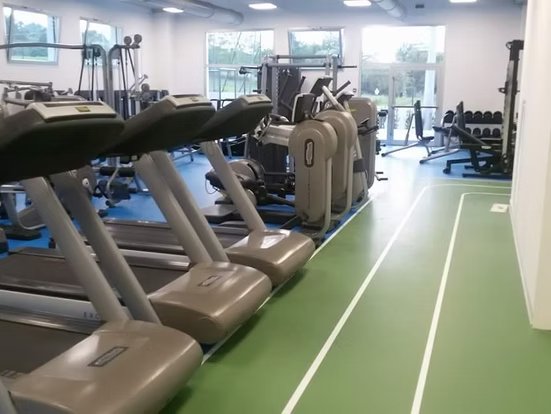
Walk into any professional gymnasium, school sports hall, or multi-purpose arena. What do you notice first? The court lines? The lighting? For most people, the floor itself fades into the background. But for athletes, coaches, and facility managers, the surface beneath their feet is the most critical piece of equipment in the entire building.
A high-performance sports floor does more than just look good. It absorbs impact to protect joints, provides consistent ball bounce for fair play, and offers reliable slip resistance even during intense sweat-soaked games. But here’s the truth that many buyers discover too late: not all sports flooring is created equal.
The difference between a floor that lasts 10 years and one that fails in 18 months comes down to two things: the quality of raw materials and the integrity of the production process. Behind every roll of vinyl lies a series of decisions—about plasticizers, fiberglass mesh, filler content, and curing temperatures—that directly determine safety, durability, and value.
At RunsureFloor, we’ve spent years engineering sports floor mats that perform under real-world conditions. In this article, we pull back the curtain on sports vinyl flooring production. You’ll learn what questions to ask, which defects to watch for, and why the right sports flooring company makes all the difference for your project.
1. What Makes a Truly Game-Changing Sports Floor?
A game-changing sports floor isn’t defined by price or brand name alone. It’s defined by performance characteristics that come directly from material selection and manufacturing precision.
The Three Non-Negotiable Performance Features
| Feature | What It Means | Why It Matters |
|---|---|---|
| Shock absorption | Floor compresses slightly under impact then returns energy | Reduces stress on knees, ankles, and lower back by 30–55% |
| Vertical deformation | Controlled deflection (typically 2.3–5.0mm under EN 14904) | Prevents “dead spots” while still protecting joints |
| Slip resistance | Coefficient of friction between 0.4 and 0.6 (dry or wet) | Prevents falls during quick direction changes |
These features don’t happen by accident. They require precise formulations of PVC resin, plasticizers, stabilizers, and fillers—plus a manufacturing process that controls thickness, density, and surface texture to within fractions of a millimeter.
When you choose sports flooring from an experienced sports flooring manufacturer, you’re paying for engineering. When you chase the lowest price, you’re gambling with athlete safety.
2. Raw Materials: The Invisible Foundation of Quality
Many buyers focus on surface appearance—color, texture, pattern. But the real story of a sports floor lies in layers that no one ever sees.
The Multi-Layer Structure Explained
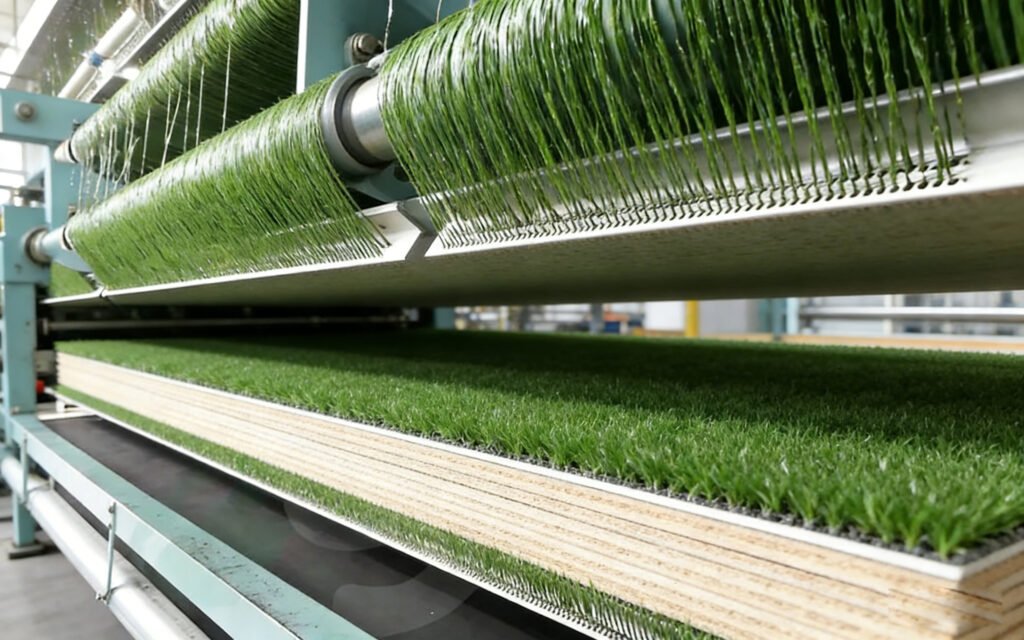
A premium sports floor typically contains four functional layers:
-
UV-treated wear layer (0.4–1.2mm) – Resists scratches, stains, and yellowing
-
Printed decorative film – Provides court lines and visual design
-
Fiberglass mesh reinforcement – Prevents stretching and dimensional change
-
Foam backing (closed-cell or cross-linked) – Delivers shock absorption
Material Red Flags vs. Green Lights
| Component | Low-Quality (Avoid) | Premium (Look For) |
|---|---|---|
| PVC resin | Recycled or mixed-source | Virgin suspension-grade PVC |
| Plasticizers | Cheap phthalates (migrate and emit odor) | Non-migrating polymer plasticizers |
| Filler (CaCO₃) | >35% – floor becomes brittle | <15% – maintains flexibility |
| Fiberglass mesh | Single-layer, <80g/m² | Double-layer, 110g/m² or higher |
| Foam | Open-cell (absorbs moisture) | Closed-cell or cross-linked |
Real-world example: A facility in Dubai installed a budget sports floor that looked perfect for six months. Then came the summer heat. The floor shrank, leaving 5mm gaps at every seam. Why? Low-grade plasticizers migrated out, and the single fiberglass layer couldn’t resist thermal expansion. The facility had to replace the entire 800m² court after just 14 months.
3. Production Defects That Ruin Performance
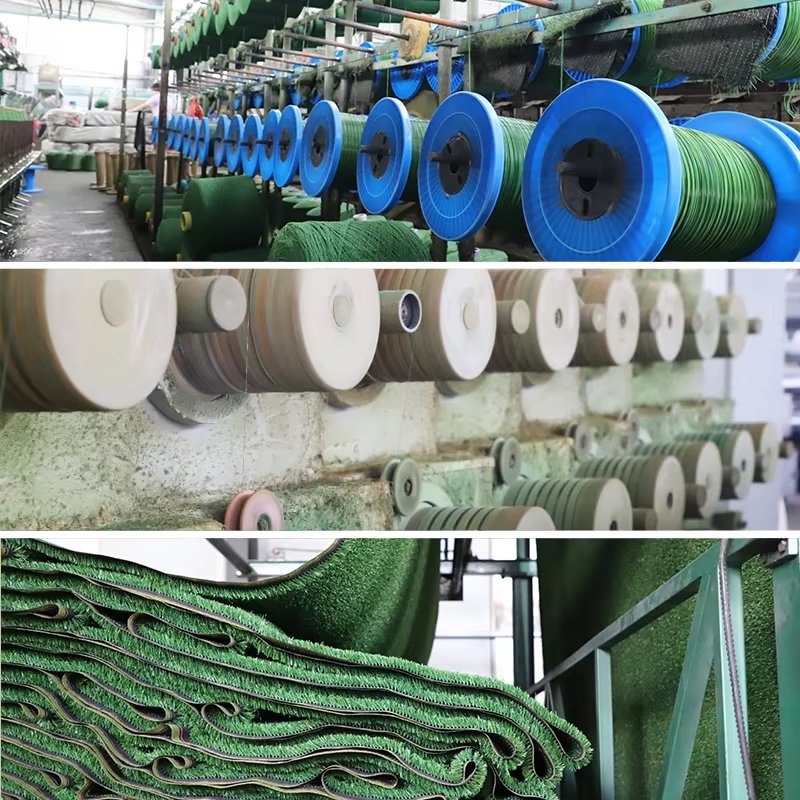
Even with premium raw materials, poor manufacturing can destroy a sports floor. Here are the most common production issues and how to spot them.
Defect #1: Inconsistent Thickness
Cause: Poor calendering control. Result: Uneven court surface, unpredictable ball bounce, and difficult installation.
Prevention: Laser-monitored rollers holding tolerance to ±0.05mm. RunsureFloor tests every production batch for thickness uniformity.
Defect #2: Weak Lamination Bonding
Cause: Insufficient heat or pressure during lamination. Result: Layers separate over time—the wear layer peels away from the print layer.
Prevention: Heat-pressure fusion with minimum peel strength of 3.5N/mm. Ask your sports flooring company for lamination bond test results.
Defect #3: Poor Foam Consistency
Cause: Temperature fluctuations during foaming (should be 160–170°C). Result: Hard spots and soft spots across the same roll—players feel uneven cushioning.
Prevention: Closed-loop temperature control systems. RunsureFloor uses automated feedback sensors that adjust parameters in real time.
Defect #4: Residual Internal Stress
Cause: Improper cooling and winding after production. Result: Floor edges curl upward during installation or in warm weather.
Prevention: 48-hour stress-relaxation annealing before final slitting and packaging.
4. Why Supplier Choice Determines Floor Longevity
You can specify perfect materials and ideal production parameters. But if your sports flooring manufacturer lacks quality discipline, nothing else matters.
What to Look for in a Trusted Sports Flooring Company
-
ISO 9001:2015 certification (quality management system)
-
ISO 14001 (environmental control reduces chemical off-gassing)
-
EN 14904 or DIN 18032-2 compliance with current test reports
-
Batch traceability – every roll labeled with date, line, and material batch
-
Third-party lab testing – not just in-house claims
The Hidden Costs of Choosing a Low-Quality Supplier
| Hidden Cost | How It Manifests |
|---|---|
| Early replacement | Floor fails in 2–3 years instead of 8–10 |
| Injury liability | Low shock absorption or slip resistance leads to falls |
| Installation delays | Inconsistent roll lengths or poor packaging |
| Color mismatch | Different batches have visible shade variation |
5. The Middle East Market: Special Considerations
For buyers looking for sports floor middle east solutions, the climate adds unique challenges. Extreme heat, high humidity, and aggressive HVAC systems all stress vinyl flooring differently than in temperate regions.
Key Requirements for Middle East Installations
-
UV stability – Wear layer must resist 2000+ hours of accelerated weathering
-
Thermal dimensional stability – Shrinkage below 0.2% after 48 hours at 60°C
-
Moisture resistance – Closed-cell foam prevents mold in humid conditions
-
White or light colors – Reduce surface temperature under direct sunlight
RunsureFloor has supplied sports floor middle east projects from Dubai to Riyadh to Doha. Our formulations are specifically engineered for hot-climate performance, including enhanced UV inhibitors and thermal-stable plasticizers.
6. Installation and Maintenance: The Final Link
Even the best sports flooring fails without proper installation. Two often-overlooked items complete the system:
Sports Floor Tape
Many people don’t realize that sports floor tape plays a critical role in court marking and temporary repairs. High-quality sports floor tape should:
-
Adhere firmly without leaving residue
-
Withstand repeated mopping and cleaning
-
Not shrink or curl at edges
-
Provide the same slip resistance as the floor itself
For permanent court lines, heat-welded seams or inlaid marking systems are superior. But for multi-sport facilities that switch between basketball, volleyball, and badminton, sports floor tape offers flexibility without damaging the underlying surface.
Sports Floor Mats
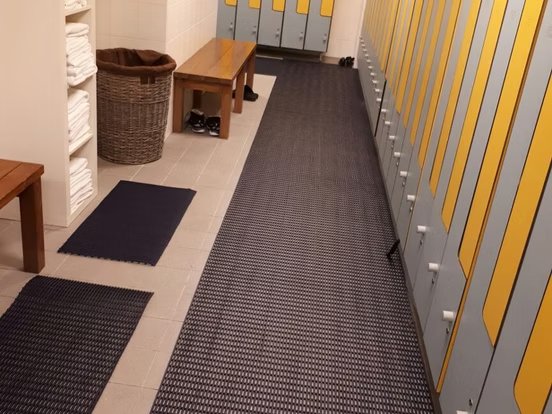
Sports floor mats serve a different purpose: protecting high-traffic zones like entrance ways, weight training areas, and equipment storage spaces. Quality sports floor mats should:
-
Have beveled edges to prevent tripping
-
Be made from non-migrating materials (won’t stain the main floor)
-
Include drainage channels if used near water fountains or locker rooms
Using dedicated sports floor mats in peripheral zones extends the life of your main playing surface by 30–40%.
7. How to Verify a Supplier's Production Quality
Before committing to any sports flooring purchase, perform these three simple tests on a sample:
Test 1: The Fold Test
Fold a sample 180° in cold conditions (refrigerate for 2 hours first). Pass = no cracking. Fail = excessive filler or poor plasticizers.
Test 2: The Scratch Test
Drag a sharp key across the wear layer. Pass = only light surface mark. Fail = deep groove exposing print layer.
Test 3: The Heat Aging Test
Leave a sample in a car dashboard for one week (60–70°C). Pass = no shrinkage, no color change. Fail = warping or yellowing.
RunsureFloor samples pass all three tests. We invite you to test ours against any competitor.
Why RunsureFloor?
For many years, we have been at the forefront of the sports flooring industry. Our state-of-the-art production facilities consistently ensure product quality, while our experienced team provides unparalleled technical support. We have extensive global export experience and a strong market position in Asia, Europe, and the Americas.
Our rigorous quality control processes ensure that every batch of sports flooring meets standards. We work closely with our customers to ensure timely delivery and price stability, placing customer needs above market trends. Our commitment to customer satisfaction is reflected in our long-term partnerships with our clients, such as our decade-long collaboration with one of the world’s largest companies.
Whether you need sports floor mats for a training facility, sports floor tape for a multi-sport arena, or a complete court solution in the sports floor middle east region, RunsureFloor delivers. As a leading sports flooring company with years of manufacturing excellence, we don’t just sell floors—we engineer performance.
Conclusion
A game-changing sports floor isn’t a commodity. It’s an engineered system where every material choice and every production step matters. From the plasticizers in the backing foam to the UV stabilizers in the wear layer, quality cannot be added after the fact—it must be built in from the start.
Don’t let a low price blind you to the hidden costs of poor materials and weak suppliers. Choose a sports flooring manufacturer with transparent processes, verifiable certifications, and a track record of global delivery.
Choose RunsureFloor. Because the game deserves nothing less.