Introduction
The sports flooring sector is no longer just about laying down a surface—it is about engineering an ecosystem that responds to athletes, climate, technology, and even data. As we move deeper into 2026, the conversation around sports floor manufacturing has shifted from basic durability to intelligent adaptability. This article examines the most compelling production trends that are reshaping how floors are designed, tested, and deployed across the globe. From bio-based polymers to AI-driven quality assurance, the future of athletic surfaces is being written now.
1. Bio-Based Polymers and Carbon-Negative Formulations
Sustainability has evolved beyond recycling. Today’s cutting-edge production lines are experimenting with bio-based polypropylene derived from sugarcane, corn starch, and even agricultural waste. These renewable feedstocks significantly reduce the carbon footprint of sports floor systems without sacrificing mechanical performance. Recent trials show that hybrid bio-polypropylene compounds can achieve impact resistance and flexural modulus comparable to petroleum-based counterparts, while offering up to 40% lower embodied carbon.
This shift is particularly relevant for Outdoor PP interlocking sports flooring, which must endure UV radiation, thermal cycling, and mechanical fatigue. Manufacturers are now incorporating carbon-negative mineral fillers that actively sequester CO₂ during the curing process. The result is a new generation of Polypropylene modular interlocking floor tiles that are not only recyclable at end-of-life but also climate-positive during their operational phase.
2. Self-Healing Surface Technologies
One of the most disruptive innovations entering production is micro-encapsulated self-healing agents. These microscopic capsules are embedded within the top wear layer of sports floor systems. When surface scratches or minor abrasions occur, the capsules rupture and release a liquid healing agent that polymerizes upon exposure to air and ambient heat, effectively “healing” the damage within 24 to 48 hours.
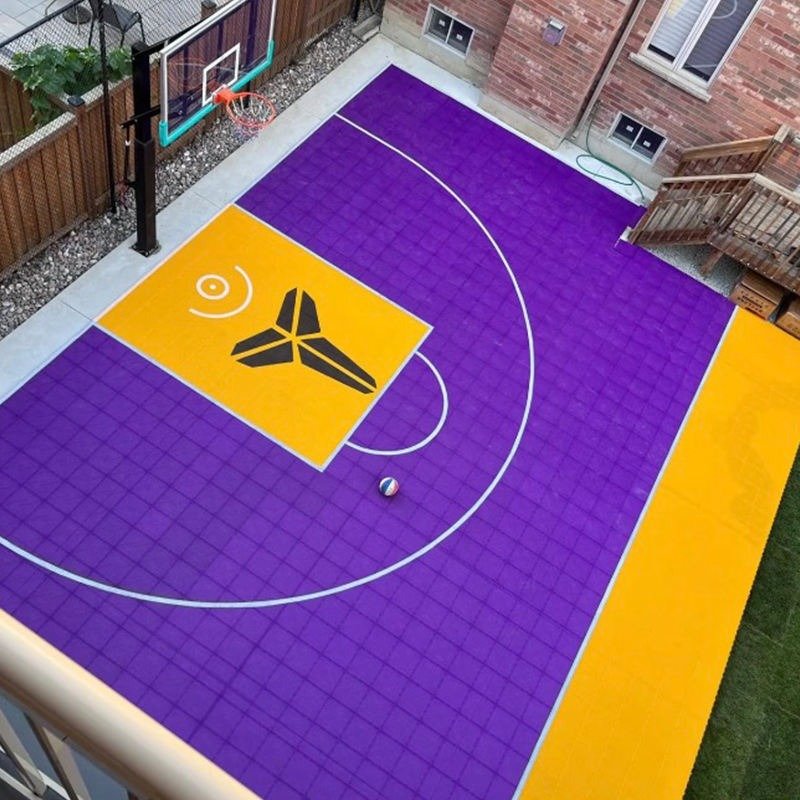
This technology is a game-changer for high-traffic installations such as Basketball court PP interlocking flooring, where constant pivoting and shoe abrasion accelerate surface wear. Early field tests indicate that self-healing surfaces can extend the service life of modular flooring by 50–70%, dramatically reducing replacement frequency and maintenance costs. Production lines are now being retrofitted with specialized mixing heads to ensure uniform capsule dispersion without compromising the tile’s structural integrity.
3. AI-Optimized Color Matching and Visual Personalization
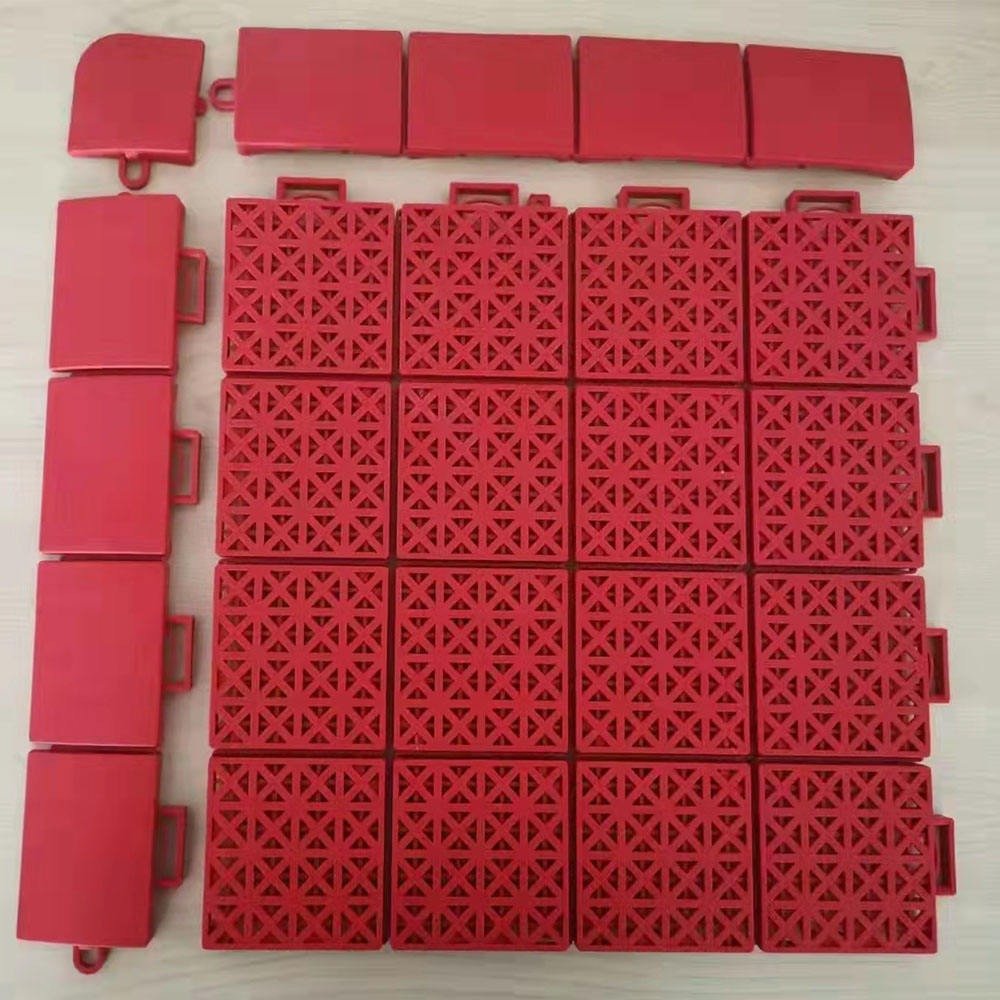
Gone are the days of limited color palettes. Advanced AI-driven color formulation systems are now being deployed in production facilities, allowing for on-demand creation of bespoke hues, gradients, and even photorealistic digital prints directly onto Polypropylene modular interlocking floor tiles. These systems analyze light reflectance, pigment stability, and UV fading curves in real time, ensuring that custom visuals maintain their vibrancy for years.
This capability is transforming how facilities approach branding and wayfinding. For instance, PP interlocking garage floor tiles can now be produced with integrated visual cues for parking zones, while Removable PP interlocking court flooring can feature temporary sponsor logos that are applied during manufacturing rather than post-installation. The production process uses digital droplet deposition techniques that reduce pigment waste by nearly 60% compared to traditional roll-coating methods.
4. Dynamic Friction Regulation for Multi-Sport Versatility
Different sports demand different friction coefficients, and multi-purpose venues have long struggled to find a compromise. Emerging production techniques now enable the creation of Anti slip PP interlocking plastic flooring with variable friction zones—areas of the same tile that exhibit different slip resistances based on micro-texture engineering.
Using precision laser-engraving during the molding phase, manufacturers can produce tiles where the central playing area offers medium friction for ball sports, while perimeter zones feature enhanced grip for sudden stops and lateral movements. This innovation is particularly valuable for educational facilities and community centers that host basketball, badminton, and fitness classes on the same sports floor within a single day. Production quality control now includes automated friction-mapping systems that scan every tile batch to verify zone-specific performance.
5. Acoustic Engineering for Noise Reduction
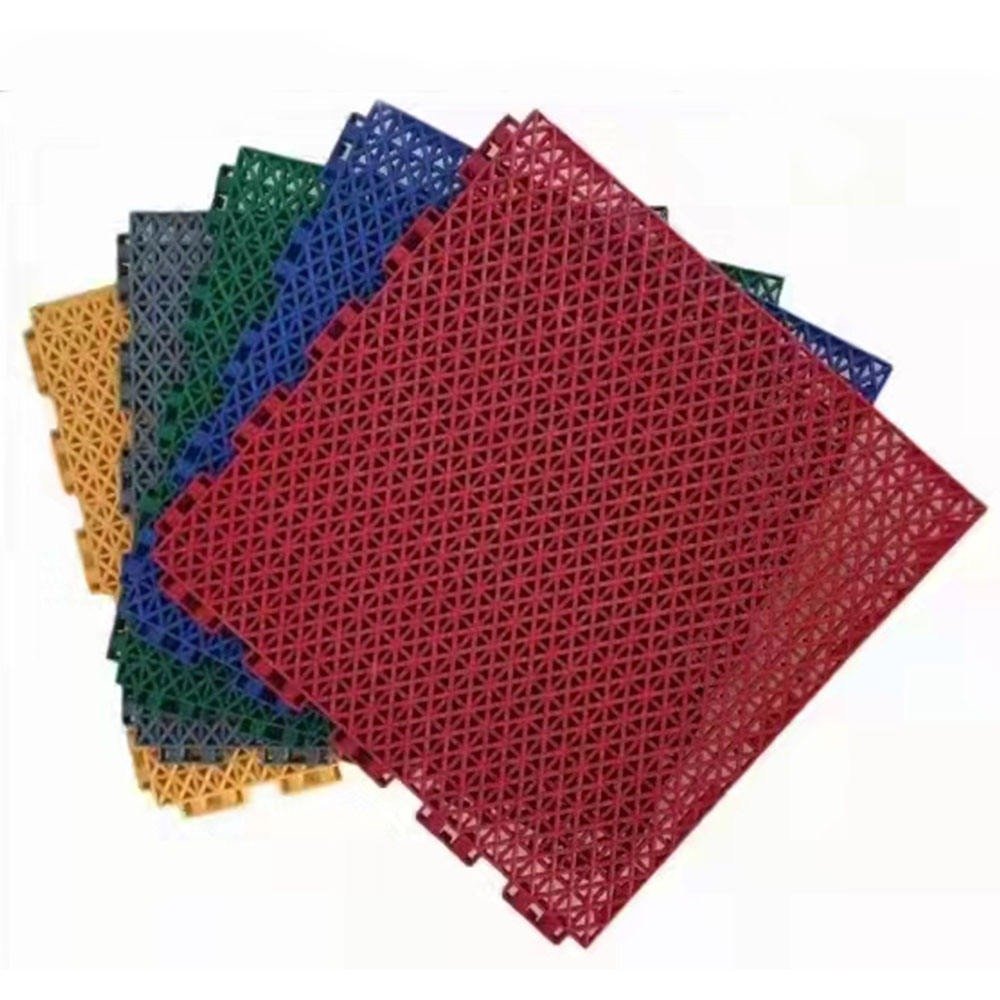
Noise pollution is an often-overlooked factor in indoor sports facilities. New production formulations incorporate closed-cell acoustic membranes that are co-extruded with the base layer of Waterproof PP interlocking floor mats. These membranes dampen impact noise by up to 18 decibels, creating a more comfortable environment for players and spectators alike.
For suspended installations, such as Suspended PP interlocking outdoor tiles used on rooftop courts or elevated podiums, acoustic underlays are now being integrated directly into the tile’s support structure. This eliminates the need for separate underlayment installation, reducing labor costs and material waste. Production lines have adapted by adding a secondary extrusion stage that bonds the acoustic layer without using solvent-based adhesives, aligning with volatile organic compound (VOC) reduction goals.
6. Modular Systems with Tool-Free Assembly
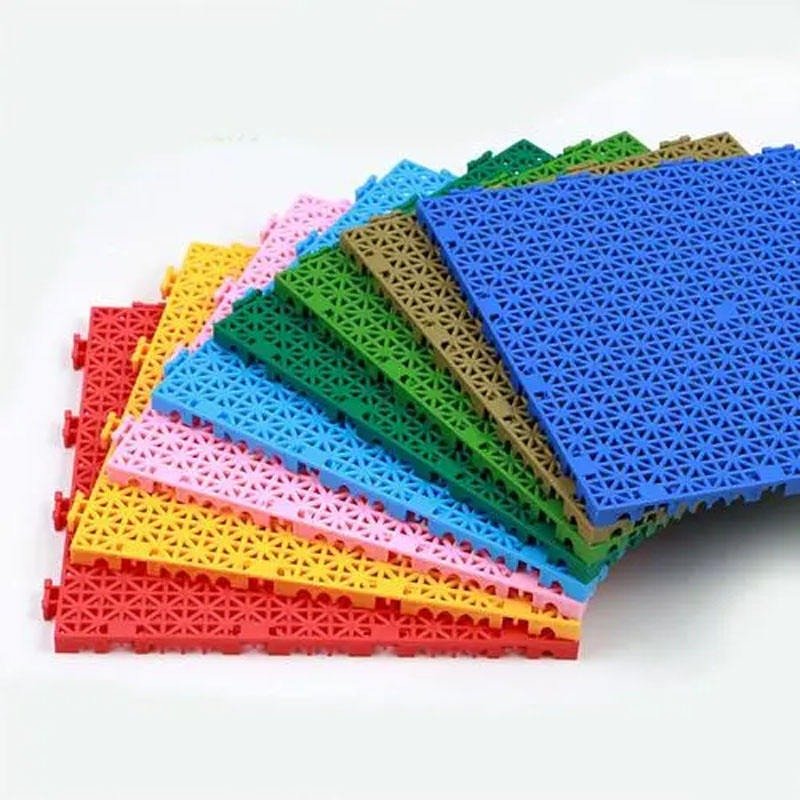
Installation speed and simplicity are major drivers in product development. The latest generation of Click lock PP interlocking flooring for car wash and workshop applications features a revolutionary dual-locking mechanism that requires no mallets, pull bars, or adhesives. The system uses a spring-loaded tab that audibly “clicks” when properly engaged, giving installers immediate tactile and auditory confirmation of secure connections.
This innovation has profound implications for Heavy duty PP interlocking workshop flooring, where heavy equipment and rolling loads demand absolute stability. The click-lock system’s shear strength has been independently tested to exceed 4,500 Newtons per connection, surpassing traditional friction-fit systems by 35%. Production molds have been redesigned with tighter tolerances, and every batch undergoes automated pull-force testing to ensure consistency.
7. Infrared-Reflective Pigments for Temperature Management
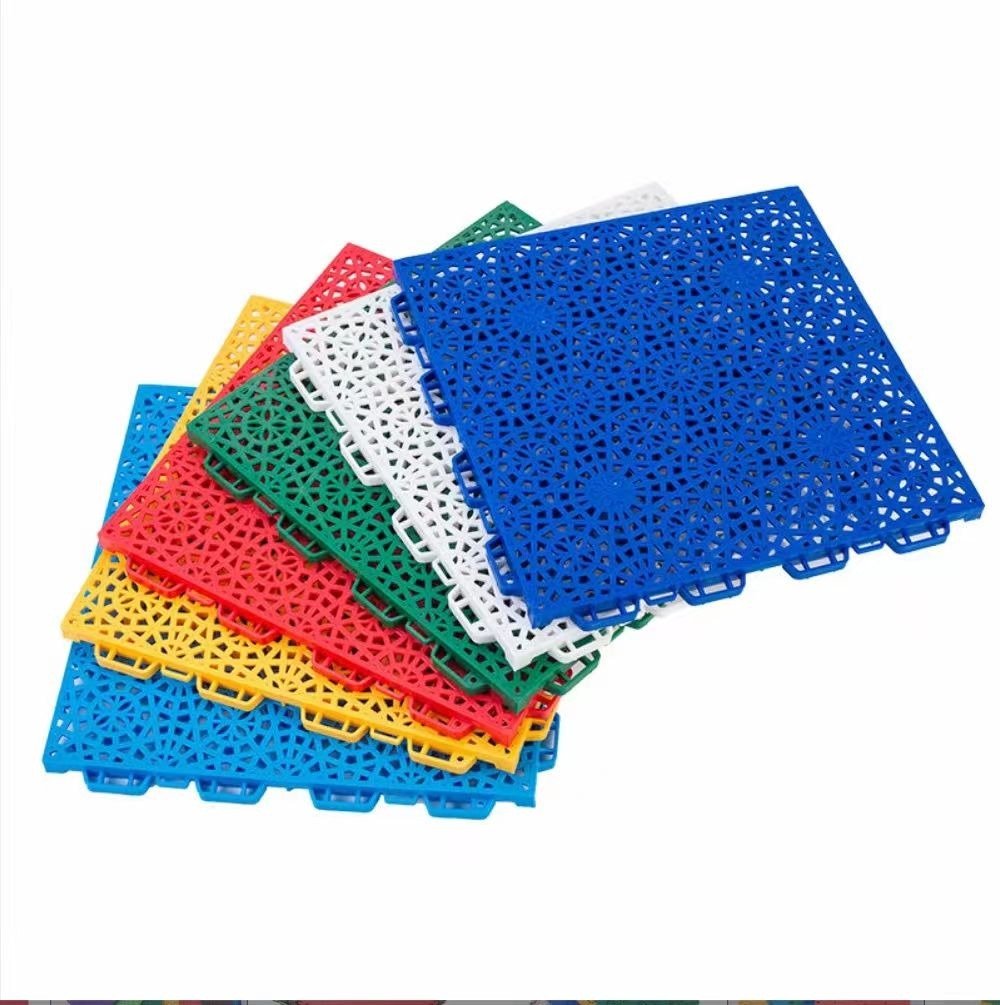
Outdoor sports surfaces face the dual challenge of thermal expansion and surface heat absorption. To address this, manufacturers are now incorporating infrared-reflective (IRR) pigments into Outdoor PP interlocking sports flooring formulations. These pigments reflect a significant portion of solar radiation, keeping surface temperatures up to 15°C cooler than conventional dark-colored tiles under direct sunlight.
This thermal management extends the tile’s dimensional stability, reducing the expansion gap requirements and allowing for tighter interlocking seams. For Basketball court PP interlocking flooring installed in open-air environments, this means consistent playing conditions even during peak summer hours. Production processes now include spectrophotometric analysis to verify IRR performance across visible and near-infrared wavelengths for every pigment batch.
8. Digital Twin Integration in Production Planning
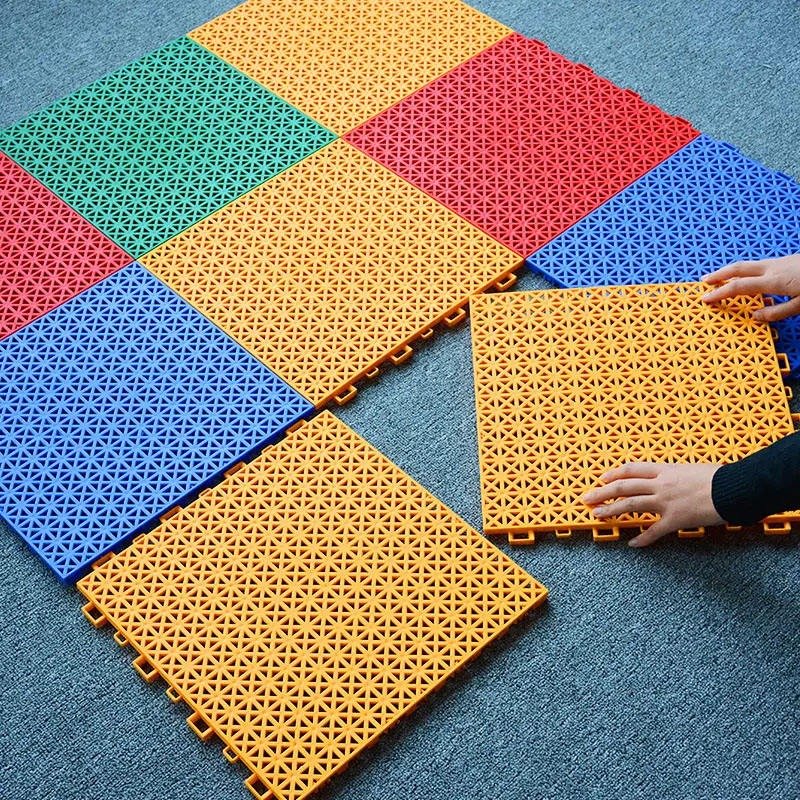
Perhaps the most transformative trend at the factory level is the adoption of digital twin technology. Every sports floor production run is now simulated virtually before a single pellet of polypropylene enters the extruder. This digital replica models material flow, cooling rates, shrinkage patterns, and even potential warpage, allowing engineers to optimize parameters in silico.
This approach has drastically reduced material waste—some facilities report a 22% reduction in scrap rates during the first year of implementation. For customized orders, such as Removable PP interlocking court flooring with specific dimensional requirements, digital twins enable precise prediction of how the tiles will behave under various climate conditions at the destination site, ensuring fit and performance from the moment of installation.
9. Modular Drainage Integration for Wet Environments
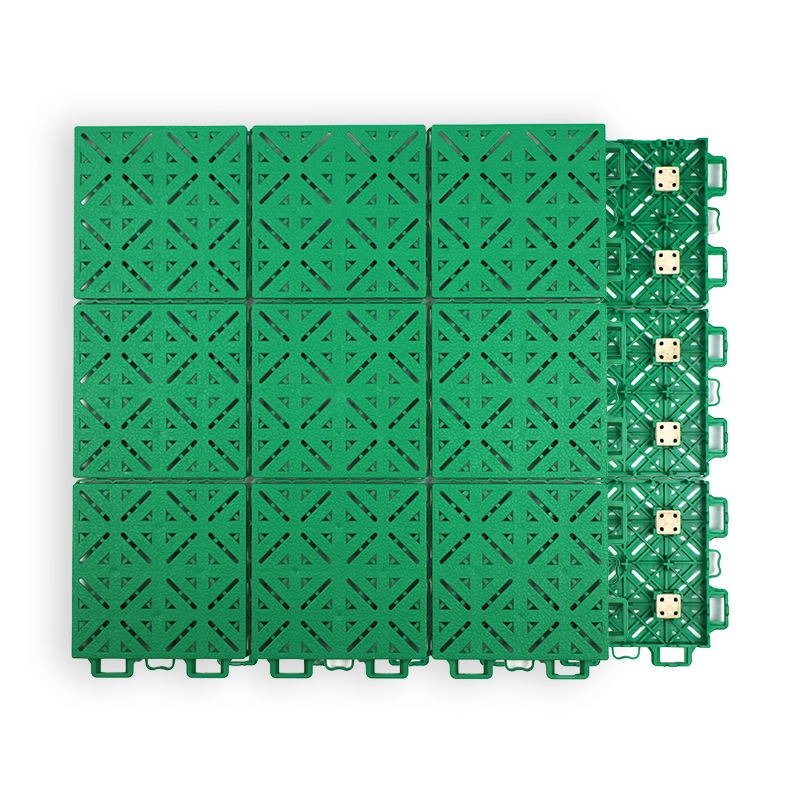
Traditional drainage solutions rely on subfloor slope and separate drainage channels. New production designs now embed micro-drainage channels directly into the underside of Waterproof PP interlocking floor mats, channeling water toward designated exit points without requiring the entire subfloor to be sloped. This innovation is particularly beneficial for Click lock PP interlocking flooring for car wash facilities, where standing water is a persistent challenge.
The drainage channels are molded during the injection process, with angled vanes that prevent debris accumulation while maintaining structural rigidity. Production quality checks now include water flow rate testing to verify that each tile meets the minimum drainage capacity specified for its intended application.

10. Regenerative End-of-Life Programs
Forward-thinking manufacturers are now designing sports floor systems with full lifecycle accountability. New production protocols include embedded RFID chips that store material composition data, enabling automated sorting at recycling facilities. This ensures that PP interlocking garage floor tiles and other modular products can be efficiently separated into pure polymer streams for closed-loop recycling.
Some companies have launched take-back programs where worn-out tiles are collected, ground into regrind, and blended with virgin resin at up to 30% loading without compromising mechanical properties. This circular approach is gaining traction among institutional buyers who are subject to stringent environmental procurement policies.

Conclusion
The sports flooring industry is entering an era where performance, sustainability, and intelligence converge. From self-healing surfaces and bio-based polymers to AI-powered color matching and digital twin manufacturing, the innovations emerging from production facilities are redefining what athletes, facility managers, and owners can expect from their sports floor investments. As these technologies mature and scale, they promise not only better playing surfaces but also a more responsible and responsive industry.
RunsureFloor Company Profile
For many years, we have been at the forefront of the sports flooring industry. Our state-of-the-art production facilities consistently ensure product quality, while our experienced team provides unparalleled technical support. We have extensive global export experience and a strong market position in Asia, Europe, and the Americas.
Quality Control and Global Supply
Our rigorous quality control processes ensure that every batch of sports flooring meets standards. We work closely with our customers to ensure timely delivery and price stability, placing customer needs above market trends. Our commitment to customer satisfaction is reflected in our long-term partnerships with our clients, such as our decade-long collaboration with one of the world’s largest companies.