
Introduction
The sports flooring industry is undergoing a rapid transformation. Gone are the days when a simple wooden court or basic rubber mat sufficed for athletic activities. Today, the demand is for high-performance surfaces that enhance athlete safety, improve game dynamics, and contribute to environmental sustainability. As sports evolve and athletes push their physical limits, the ground they compete on must offer more than just a flat surface—it must provide a strategic advantage.
For manufacturers, this shift means rethinking production processes, material sourcing, and design innovation. We are moving into an era where the “sports floor” is a critical piece of equipment, not just a building material. With the rise of multi-purpose facilities, hybrid sports, and a growing awareness of health and safety, the industry is asking: What new trends are shaping the future of sports flooring? And more importantly, what does it take to manufacture a floor that meets these future demands?
New Trends in the Sports Flooring Industry
The most significant trend currently reshaping the industry is the integration of smart technology. We are seeing the emergence of “interactive courts” that use embedded sensors to track player movements, speed, and impact forces. These smart sports floors provide real-time data to coaches and athletes, allowing for performance optimization and injury prevention. Another major driver is the “Green Transition.” With strict environmental regulations and a push for carbon neutrality, there is a massive shift toward recyclable materials and bio-based polymers.
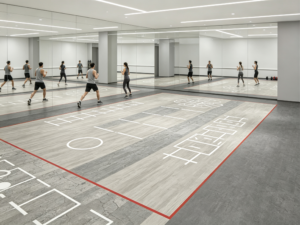
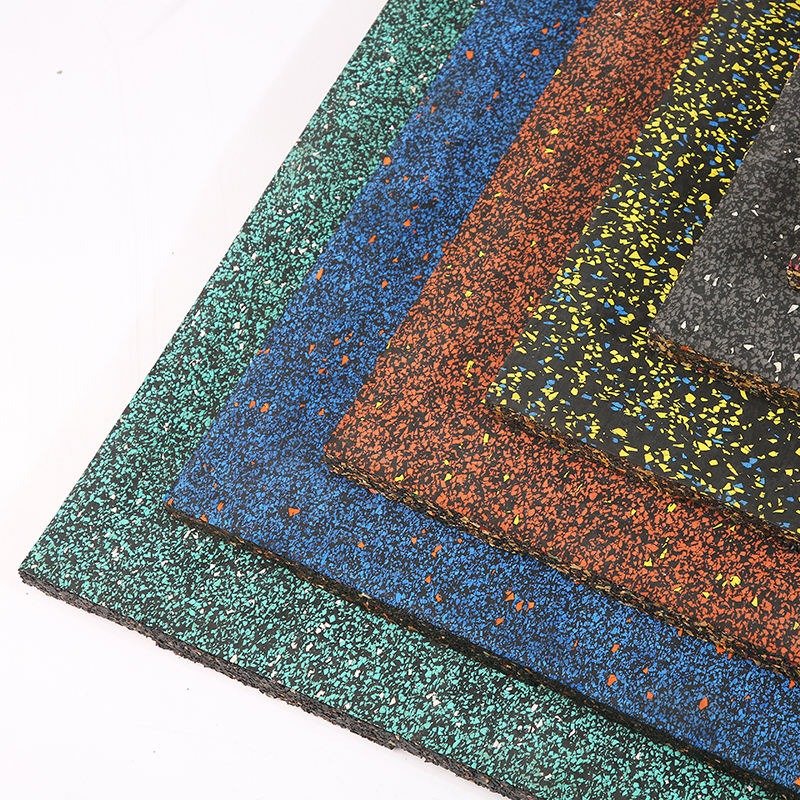
Furthermore, the rise of cross-training and functional fitness has created a demand for surfaces that can handle diverse activities—from basketball to yoga, and from heavy weightlifting to HIIT (High-Intensity Interval Training). This has led to a surge in demand for modular flooring systems that are easy to install and interchangeable. Finally, aesthetic customization is no longer a luxury but a standard request; clients want specific colors, logos, and patterns integrated directly into the surface. This requires advanced manufacturing techniques like 3D printing and digital embossing, which allow for high detail without compromising durability.
The Production Challenges of Modern Sports Flooring
To meet these evolving trends, the production of sports flooring has become a sophisticated engineering process. While wood remains a classic choice, synthetic surfaces—particularly rubber and PVC—are dominating the market due to their superior shock absorption and low maintenance. However, the production of these materials faces severe challenges, particularly in balancing flexibility with durability.
For a sports floor, the core challenge lies in the compounding phase. This is where raw polymers are mixed with plasticizers, stabilizers, and fillers. If the mixture is too soft, the floor will dent and tear easily. If it is too hard, it loses its shock-absorbing properties, risking athlete injury. Therefore, modern production lines are equipped with computerized mixing mills that ensure absolute precision.
Material Innovations: The Rise of Rubber Solutions
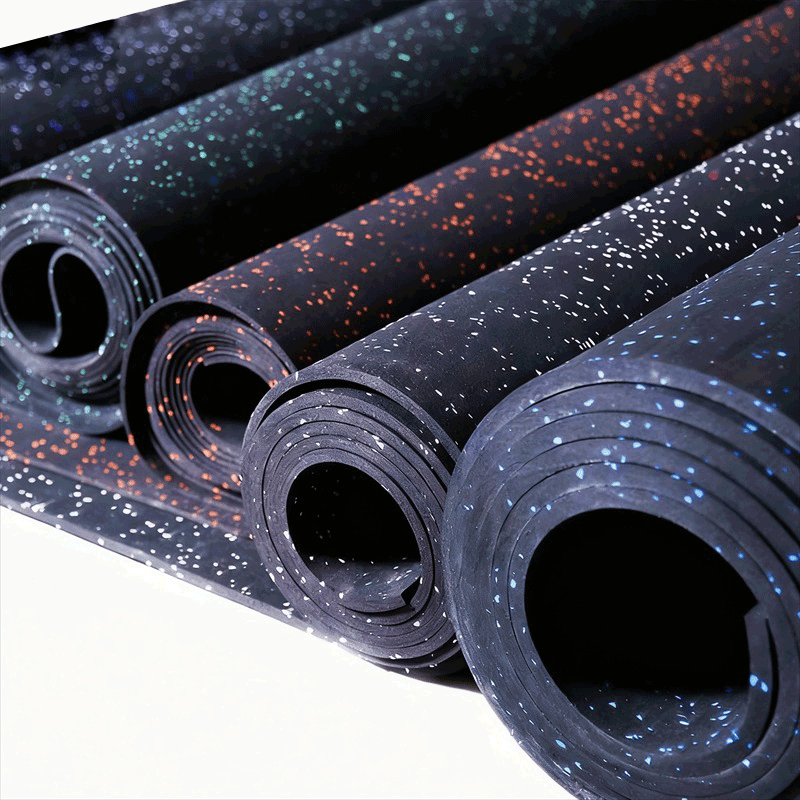
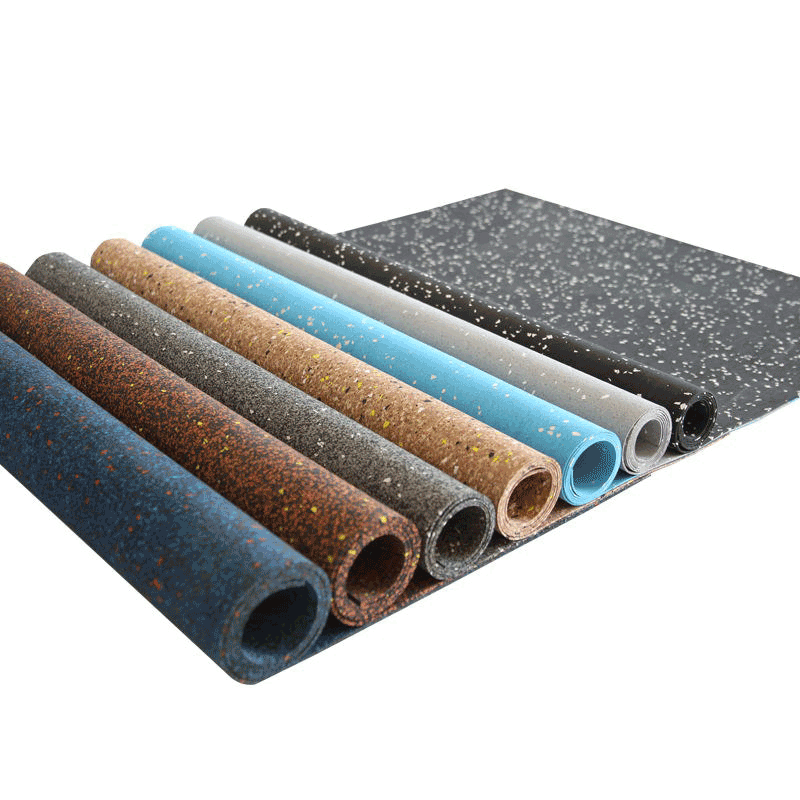
When discussing versatile sports flooring, rubber remains the gold standard for its resilience and safety. Among the most sought-after products in the market today is the Non-slip rubber floor. This flooring is essential for areas prone to moisture, such as swimming pool decks or indoor courts where sweat and spills are common. The production of non-slip surfaces involves embedding high-friction aggregates into the surface layer or creating a textured embossed pattern during the calendaring process. This ensures athletes can pivot and stop abruptly without the risk of slipping, providing stability during intense lateral movements.
Another essential category is Gym rubber flooring. This product is specifically designed to withstand the heavy loads of weightlifting equipment and the constant stomping of footwork. The manufacturing process for Gym rubber flooring focuses on density. By using higher specific gravity polymers and high-pressure vulcanization, producers ensure that the floor remains resilient even under point loads from barbells and machines. This type of flooring is ubiquitous in commercial gyms, where durability is as critical as aesthetics.
To extend the lifespan of these surfaces, manufacturers have developed the Wear-resistant rubber floor. In high-traffic zones, the top layer must resist abrasion from shoes, cleats, and rolling equipment. This is achieved through an additional layer of transparent, highly durable polymer on the surface, or by using specialized carbon-black reinforcements that significantly reduce surface friction wear. The goal is to ensure the sports floor maintains its performance characteristics and visual appearance for years, reducing the frequency and cost of replacement.
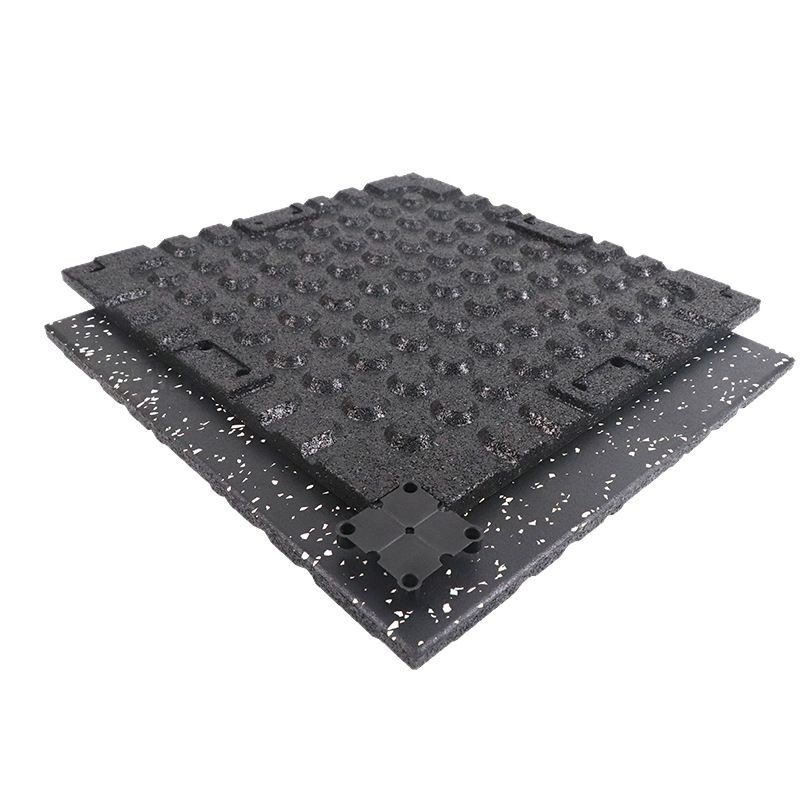
Performance is also defined by safety. This is where the Shock-absorbing rubber flooring takes center stage. The physics behind shock absorption are complex; the floor must reduce the force of impact to protect joints (knees and ankles) while simultaneously providing energy return to aid in jumping and sprinting. Manufacturers achieve this through engineered cellular structures—either closed-cell or open-cell foams within the rubber base. These air pockets compress under impact and expand back to their original shape, acting as a spring. The production of this specific flooring requires precise control over the foaming agents and curing times, as a variance of just a few degrees in temperature can drastically alter the energy restitution of the final product.
Sustainability as a Production Standard
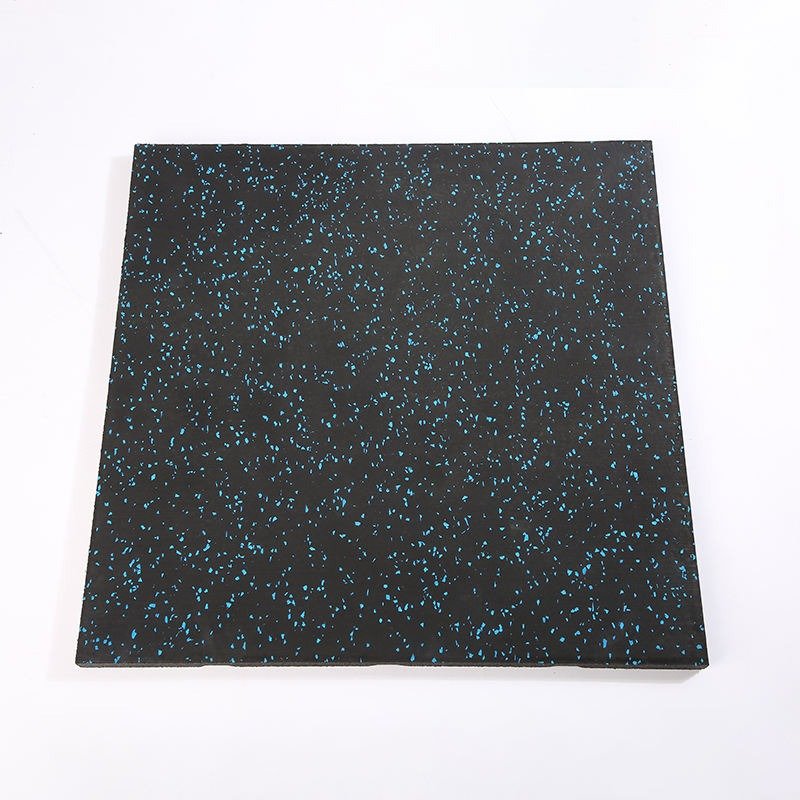
Perhaps the most critical shift in manufacturing is the push for eco-friendly options. The modern consumer and commercial developer are increasingly scrutinizing the carbon footprint of building materials. The production of Eco-friendly rubber floor options has transitioned from a niche trend to a standard practice. For manufacturers, this involves using recycled rubber content—often sourced from post-consumer tires or industrial waste—and employing water-based adhesives rather than solvent-based ones that release volatile organic compounds (VOCs).
However, producing an Eco-friendly rubber floor without sacrificing performance is a technical hurdle. Recycled rubber often contains impurities or inconsistent polymer chains. Advanced filtration systems and cryogenic grinding processes are now employed to purify the raw materials before they enter the press. Leading manufacturers are also investing in solar-powered production facilities and closed-loop water systems to minimize waste. This holistic approach to sustainability is changing the business model, where the “Green” label adds significant value to the product, making it a preferred choice for schools and public facilities.
RunsureFloor Company Profile
For many years, we have been at the forefront of the sports flooring industry. Our state-of-the-art production facilities consistently ensure product quality, while our experienced team provides unparalleled technical support. We have extensive global export experience and a strong market position in Asia, Europe, and the Americas.
Quality Control and Global Supply
Our rigorous quality control processes ensure that every batch of sports flooring meets standards. We work closely with our customers to ensure timely delivery and price stability, placing customer needs above market trends. Our commitment to customer satisfaction is reflected in our long-term partnerships with our clients, such as our decade-long collaboration with one of the world’s largest companies.

Conclusion
The future of the sports floor industry is exciting and challenging. As we look ahead, the winners in this market will be those who can seamlessly blend technology with sustainability, and safety with aesthetics. The trends point towards a more interconnected and environmentally conscious world, and flooring must adapt accordingly. From the application of Non-slip rubber floor in aquatic centers to the heavy-duty usage of Gym rubber flooring, and from the longevity provided by Wear-resistant rubber floor to the protective qualities of Shock-absorbing rubber flooring, the importance of quality cannot be overstated. At RunsureFloor, we remain committed to innovation and excellence, ensuring that every surface we produce not only meets but exceeds the expectations of athletes and facility managers worldwide.