Introduction
The quality of a sports floor is not just about its surface appearance; it is a complex science of materials, engineering, and precision manufacturing. For facility managers, distributors, and sports flooring company representatives, understanding how these surfaces are produced is critical to ensuring athlete safety and long-term durability. As we look toward the future, the industry is shifting rapidly. So, what new trends in the sports flooring industry are worth paying attention to? This article will explore the manufacturing challenges, the latest innovations, and the market shifts defining the next generation of sports flooring.
The Core Production Challenges: From PVC to Performance
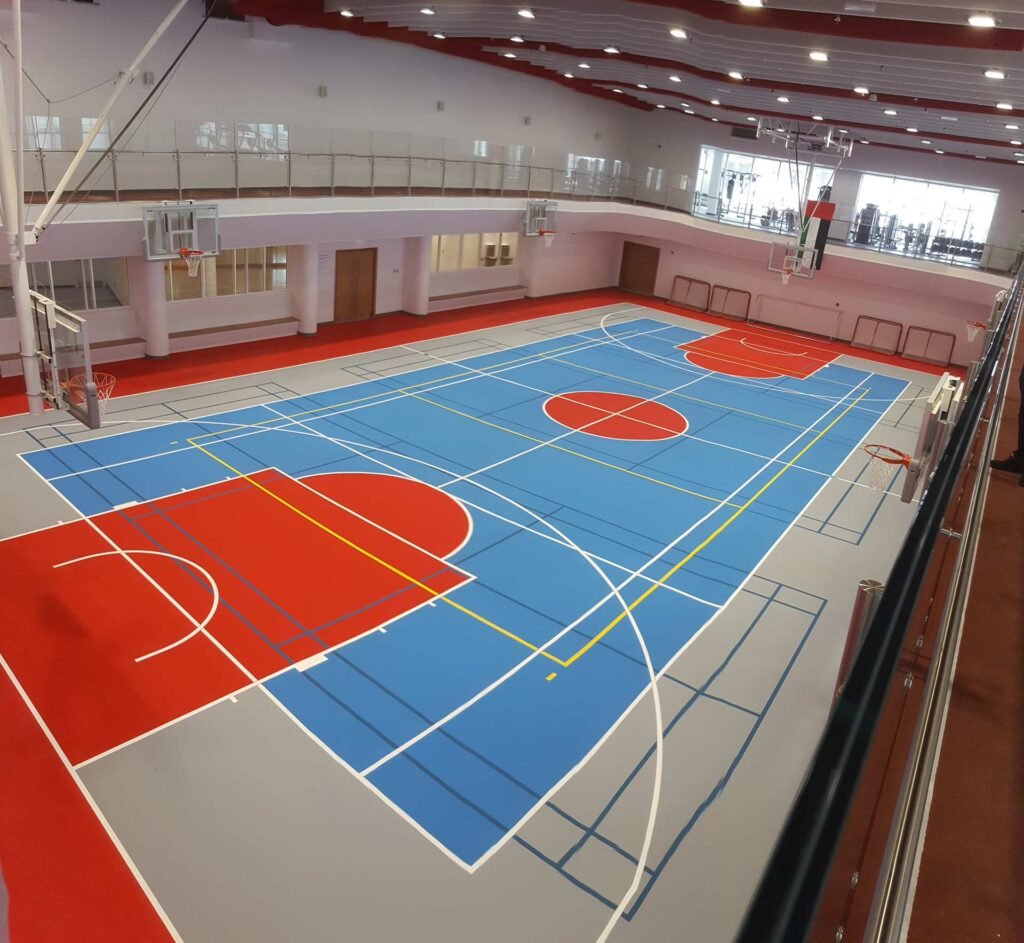
Manufacturing high-quality sports flooring begins with raw material selection. Many modern floors use multi-layer PVC systems, each layer serving a distinct function—from a glass-fiber reinforced stabilizer to a dense foam backing for shock absorption. One of the biggest production hurdles is ensuring thickness consistency across the entire roll. A variance of even 0.1mm can affect ball bounce and player safety. Furthermore, the application of sports floor tape requires precision cutting during production to ensure that seam tapes match the floor’s expansion and contraction rates. Without rigorous quality control, floors may warp or separate under heavy use.
Trend 1: Sustainable and Non-Toxic Materials
The most significant trend today is the demand for phthalate-free and low-VOC materials. We are seeing a shift away from traditional plasticizers toward bio-based or completely recyclable components. This is especially important for indoor courts where air quality is paramount. Sports flooring manufacturers are now investing in closed-loop production systems to reduce waste. In regions like the sports floor middle east market, where high temperatures can accelerate off-gassing, non-toxic floors are becoming a mandatory specification rather than an option.
Trend 2: Smart and Interlocking Modular Systems
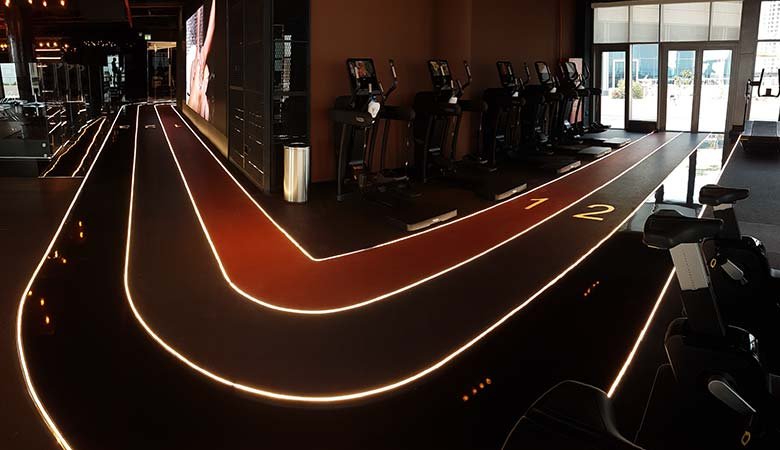
While roll-out vinyl remains popular, the rise of modular sports floor mats is reshaping the industry. These interlocking tiles are easier to replace than entire sheets, reducing long-term maintenance costs. The new trend is “hybrid” systems that combine the shock absorption of roll-out sports flooring with the easy repair of modular tiles. Production lines are now adapting to create mats with micro-engraved textures that improve slip resistance without abrasive chemicals.
Trend 3: Regional Customization (Focus on the Middle East)
A trend that cannot be ignored is regional specification. The sports floor middle east region requires products that withstand extreme temperature fluctuations and UV exposure, often in semi-outdoor multipurpose halls. Consequently, manufacturers are developing UV-stabilized top coats and thermal-insulating backings specifically for this climate. Distributors in Dubai and Riyadh are moving away from generic European products and seeking floors designed for 50°C summer heat.
Installation and Safety: The Role of Tape and Mats
Proper installation is as vital as production. Sports floor tape has evolved from simple adhesive strips to dual-lock systems that secure floors without permanent glue. Meanwhile, sports floor mats used for wrestling or martial arts require high-density foam that resists compression set. In production, these mats undergo “impact testing” to ensure they retain 95% of their thickness after 100,000 cycles. Without this, mats become dangerous hard surfaces within months.
The Global Supply Chain Reality
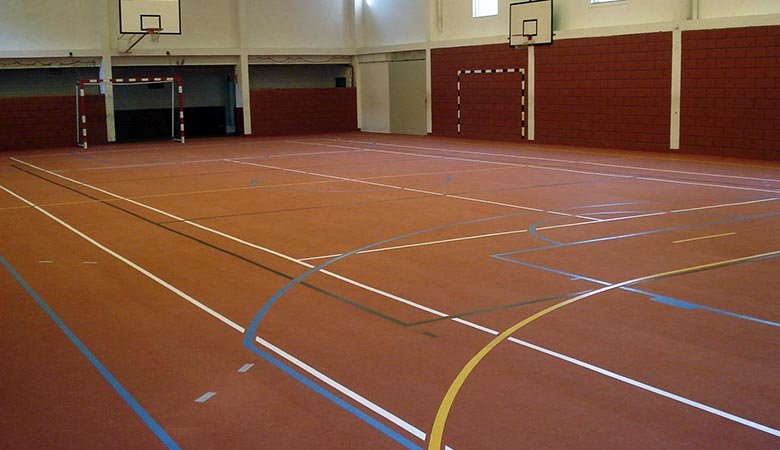
Currently, sports flooring manufacturers face challenges with raw material price volatility. However, the trend is shifting toward “regional production hubs” to reduce shipping costs and lead times. For example, producing for the sports floor middle east market from a hub in Turkey or India is becoming more common than shipping from China or the USA. This allows for faster deployment and localized technical support. A reliable sports flooring company must now offer not just a product, but a logistical guarantee.
Conclusion
The future of sports flooring lies in eco-friendly chemistry, smart modular design, and climate-specific engineering. Whether you need durable sports floor mats for a combat sport, reliable sports floor tape for a basketball court, or a full-scale sports floor for a multipurpose arena, the industry is moving toward custom, high-performance solutions. As these trends continue to evolve, partnering with experienced manufacturers is the only way to ensure quality.
About the Manufacturer: RunsureFloor
At this point, we would like to introduce you to a partner who embodies these production standards and trends.
RunsureFloor Company Profile
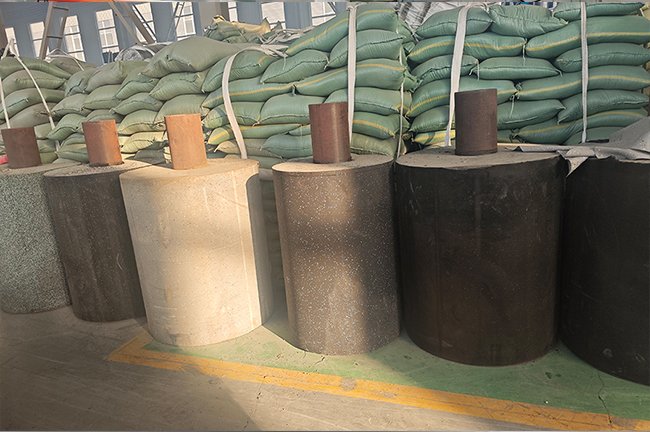
For many years, we have been at the forefront of the sports flooring industry. Our state-of-the-art production facilities consistently ensure product quality, while our experienced team provides unparalleled technical support. We have extensive global export experience and a strong market position in Asia, Europe, and the Americas.
Quality Control and Global Supply
Our rigorous quality control processes ensure that every batch of sports flooring meets standards. We work closely with our customers to ensure timely delivery and price stability, placing customer needs above market trends. Our commitment to customer satisfaction is reflected in our long-term partnerships with our clients, such as our decade-long collaboration with one of the world’s largest companies.