Introduction
When it comes to athletic performance and safety, what lies beneath an athlete’s feet is just as critical as their training regimen. The global demand for high-performance surfaces is rising, but with it comes a complex web of production challenges. From raw material volatility to shifting environmental regulations, sports flooring manufacturers are facing a pivotal moment. For buyers, facility managers, and distributors—especially those in rapidly growing markets—understanding these manufacturing hurdles and emerging trends is essential for making a smart investment.
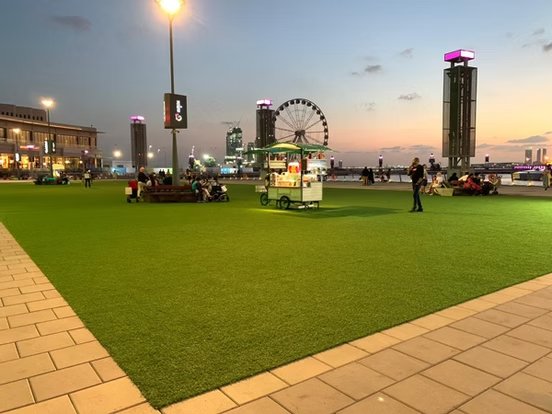
What new trends in the sports flooring industry are worth paying attention to?
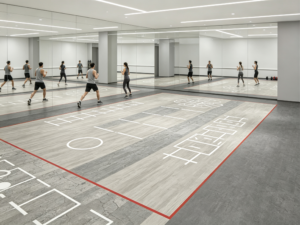
As we look toward the next generation of athletic surfaces, several key trends are reshaping the industry. First, sustainability is no longer a luxury but a necessity. Manufacturers are increasingly using recycled materials and bio-based plasticizers to produce sports floor systems that are fully recyclable at the end of their life cycle. Second, smart flooring technology is gaining traction. Embedded sensors in sports floor mats can now track impact absorption and wear patterns in real-time, sending data directly to facility managers. Third, there is a growing demand for multi-functional aesthetics. Venues no longer want just a green court; they want customizable graphics and logos integrated directly into the surface without compromising friction or ball bounce.
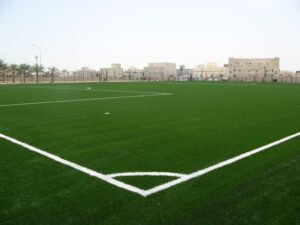
Another significant trend is the rise of portable and modular systems. The global events industry is booming, requiring floors that can be installed and removed within hours. This has increased the demand for high-tack sports floor tape that secures seams without leaving residue. Finally, regional specialization is critical. The climate in the sports floor middle east market, for example, demands extreme heat resistance and UV stability that standard European floors often lack. Consequently, leading sports flooring providers are developing region-specific formulations to prevent warping and discoloration in harsh desert environments.
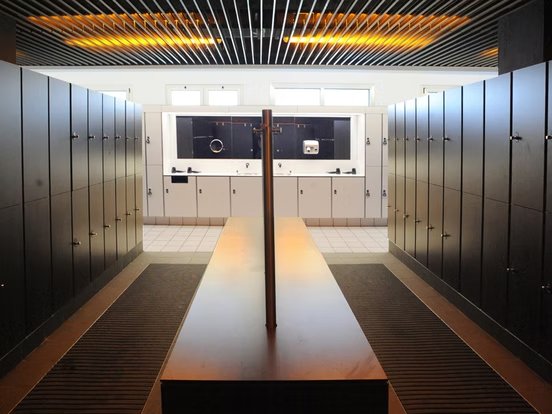
Production Challenges: The Reality of Manufacturing
Creating a world-class sports floor is a battle against physics and chemistry. One of the biggest challenges is layer adhesion. A typical professional floor consists of a wear layer, a glass fiber stabilization layer, and a closed-cell foam backing. If the factory temperature or pressure varies by even 1%, the layers can delaminate within months. Furthermore, color consistency remains a nightmare for quality control. Producing a large batch of vinyl or polyurethane without shade variation requires advanced spectrophotometry and clean-room conditions.
Another hidden challenge is shipping and storage stability. A sports flooring company must ensure that rolls of flooring do not expand or contract in a shipping container crossing the equator. If the material becomes wavy (oil-canning) due to heat, the entire batch is ruined. This is why experienced sports flooring manufacturers invest heavily in climate-controlled logistics and accelerated aging tests before shipping to regions like the Middle East or Southeast Asia.
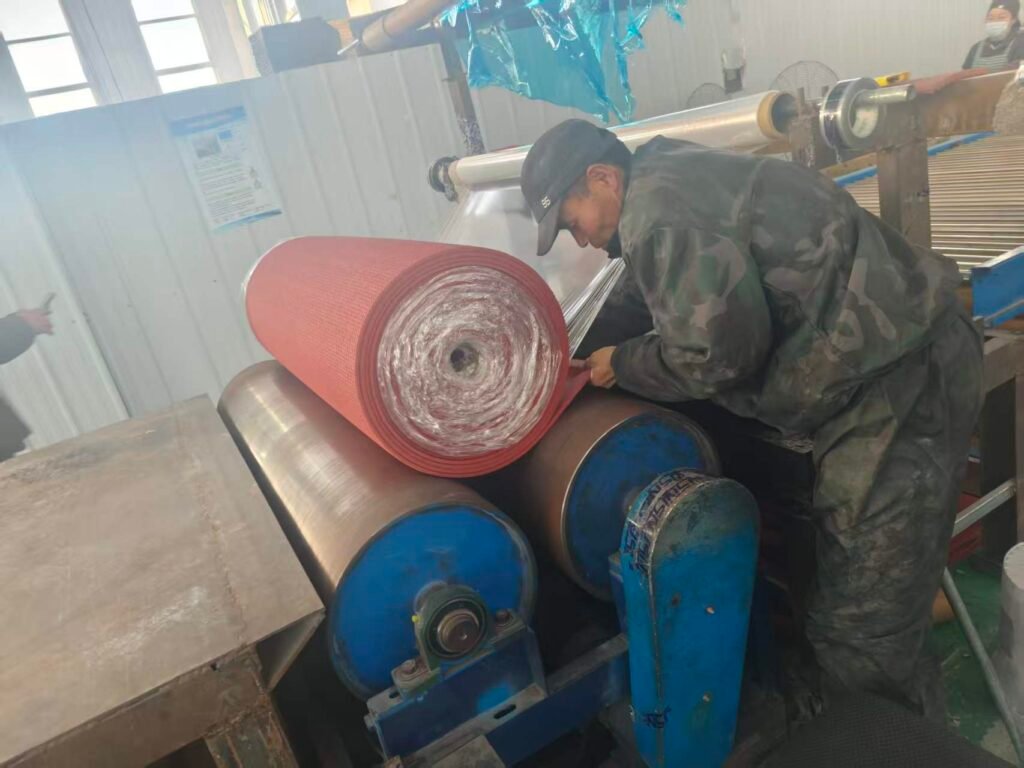
The Critical Role of Accessories
Often overlooked, accessories determine the lifespan of the installation. For instance, sports floor tape used for badminton courts must have a specific shear strength; too weak, and it peels during lunges; too strong, and it tears the surface paint. Similarly, sports floor mats used in gymnastics or weightlifting require a Shore hardness that balances energy return with joint protection. A reputable sports flooring company will produce these mats with beveled edges to prevent trip hazards, a detail often missed by low-cost competitors.
Looking Ahead: The Middle East and Global Supply Chains
The sports floor middle east sector is currently the fastest-growing vertical, driven by Vision 2030 and Expo 2025 preparations. However, importing sports flooring into this region requires compliance with strict Civil Defense fire safety codes. Manufacturers must adjust their formulas to pass the ASTM E648 critical radiant flux test without using banned halogen flame retardants. This is where the expertise of a dedicated sports flooring company becomes invaluable.
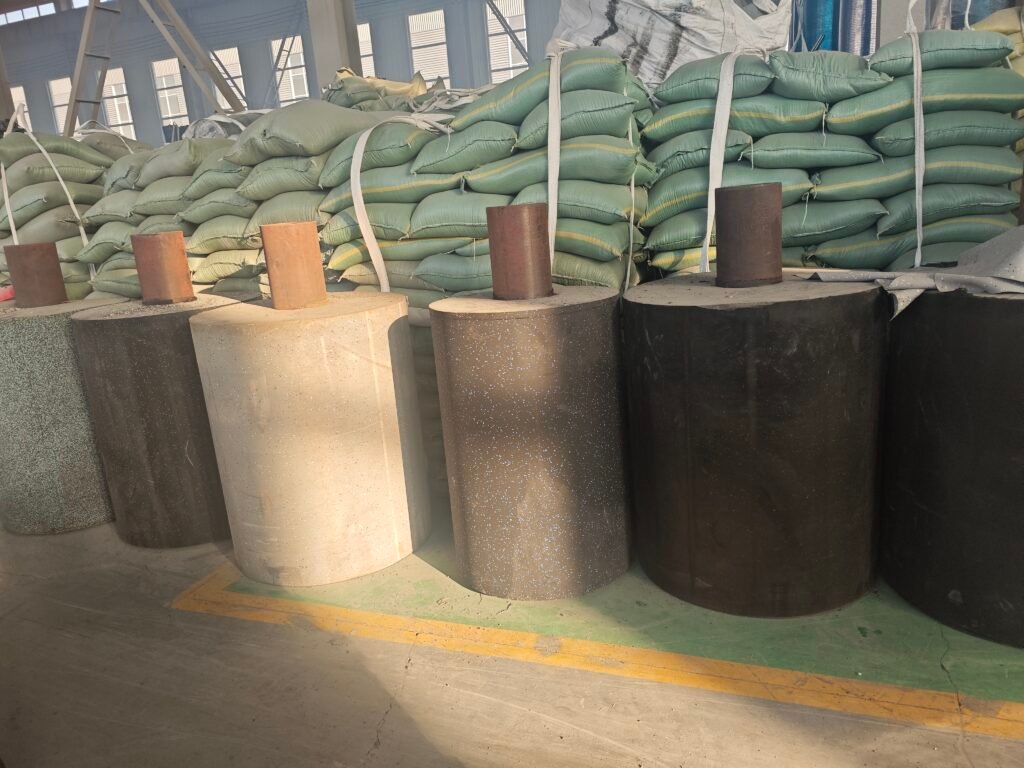
Company Profile: RunsureFloor
For many years, we have been at the forefront of the sports flooring industry. Our state-of-the-art production facilities consistently ensure product quality, while our experienced team provides unparalleled technical support. We have extensive global export experience and a strong market position in Asia, Europe, and the Americas.
Quality Control and Global Supply
Our rigorous quality control processes ensure that every batch of sports flooring meets international standards. We work closely with our customers to ensure timely delivery and price stability, placing customer needs above market trends. Our commitment to customer satisfaction is reflected in our long-term partnerships with our clients, such as our decade-long collaboration with one of the world’s largest companies.
Conclusion
Whether you are looking for durable sports floor mats for a training academy, high-performance sports floor tape for a multi-sport arena, or a full-scale sports floor for a professional league, understanding production quality is key. The trends are clear: sustainability, smart tech, and regional customization. As the market in the sports floor middle east expands, partnering with reliable sports flooring manufacturers like RunsureFloor ensures you get a product engineered to last. Choose a sports flooring company that builds its reputation on precision, not promises.