Introduction
When an athlete sprints down a court or a gymnast lands a routine, the surface beneath them is the silent partner in their performance. Yet, the journey of that surface—from raw chemical pellets to a polished, high-performance arena—is a complex story of engineering, logistics, and shifting market demands. The sports flooring industry is currently navigating a perfect storm: rising raw material costs, stricter environmental regulations, and a global clientele demanding faster turnaround times.
For distributors, architects, and facility owners, understanding the manufacturing side of these products is just as important as understanding the installation process. This article delves into the production challenges, material innovations, and logistical strategies that define today’s market. We will also explore how leading sports flooring manufacturers are adapting to regional demands—from the humid arenas of Southeast Asia to the arid climate of the Gulf region—while maintaining the uncompromising quality required for professional competition.
1. Material Science: The Shift to High-Performance Polymers
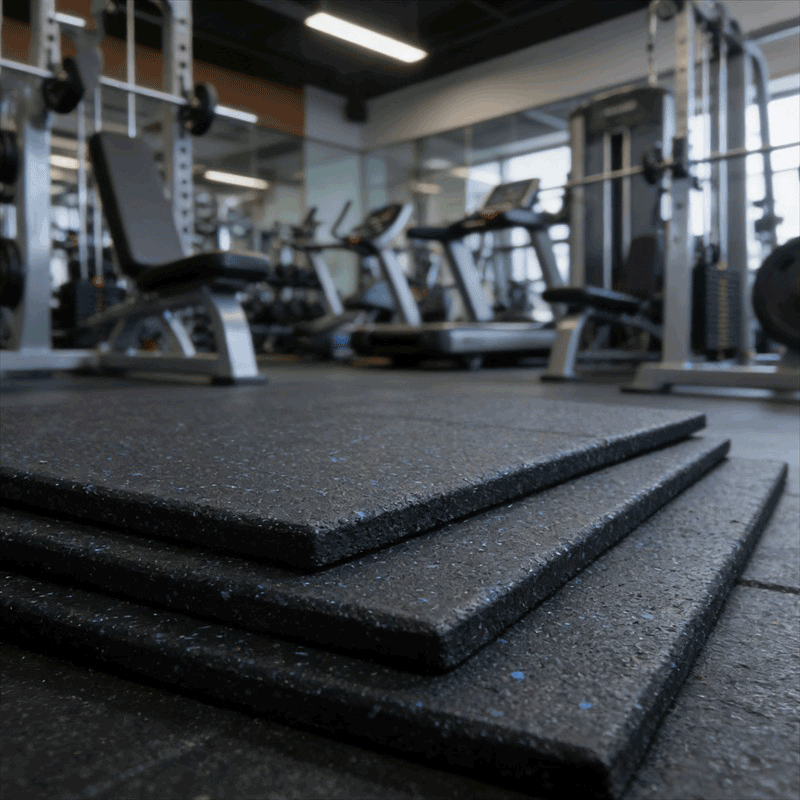
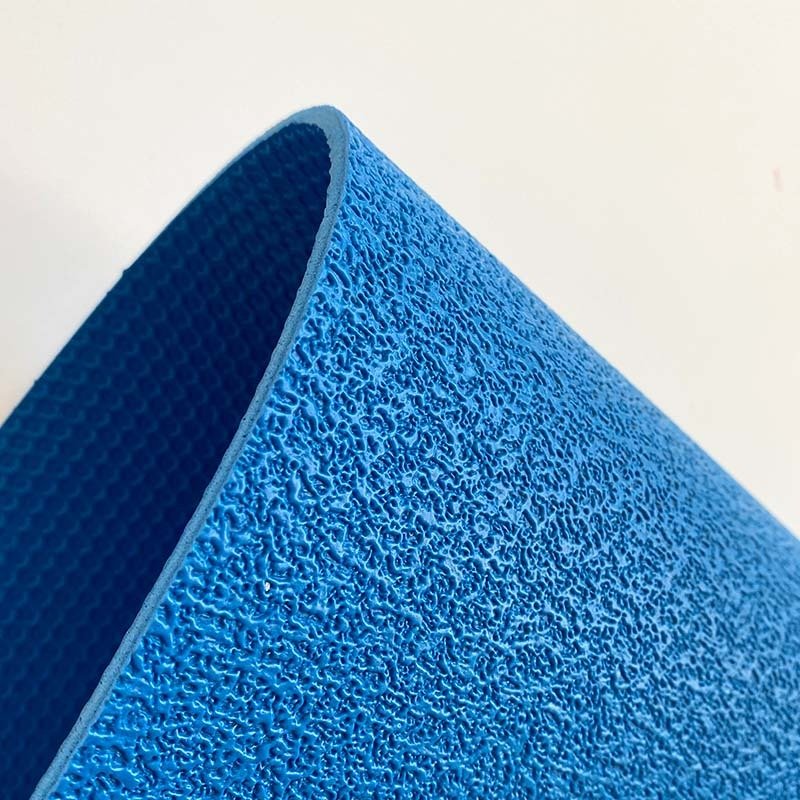
The traditional reliance on standard PVC is fading. Today, the cutting edge of production involves complex blends of thermoplastic elastomers (TPE) and polyurethane (PU) modifiers. These materials offer superior dimensional stability, meaning the floor expands and contracts less with temperature changes—a critical factor for facilities without strict climate control.
However, processing these advanced polymers requires precision. During the calendering process, even a 2°C variance in roller temperature can alter the viscosity, leading to thickness inconsistencies. This is why modern factories are investing in AI-driven thermal imaging systems that monitor the sheet in real-time, ensuring that every millimeter of the sports floor meets strict tolerance levels. Additionally, manufacturers are now incorporating antimicrobial additives directly into the wear layer. This is a game-changer for hygiene, particularly in multi-sport community centers where sports floor mats are used for both athletics and community events, reducing the risk of cross-contamination.
2. Production Efficiency: The Role of Automation and Waste Reduction
Waste is the enemy of profitability and sustainability. In the past, trimming edges and rejected batches contributed significantly to landfill waste. Today, manufacturers are implementing closed-loop recycling systems within their own factories. Trim scrap is immediately ground up and fed back into the extruder as a “regrind” layer, which is hidden beneath the surface wear layer. This ensures that the visible top layer remains 100% virgin (or bio-based) material while the backing layers utilize recycled content without compromising performance.
Automation has also revolutionized the cutting and packaging stages. Laser-guided cutting machines ensure that rolls are cut to exact lengths, minimizing overage. This precision is particularly important for sports floor tape, which is often produced in smaller, high-volume batches. New production lines now allow for the simultaneous extrusion of the tape backing and the application of the adhesive in a single pass, greatly increasing output speed and reducing the risk of adhesive contamination.
3. Regional Customization: The Middle East and Beyond
One size does not fit all. The market demands for the sports floor Middle East region are vastly different from those in Northern Europe. In the Gulf countries, ground temperatures in un-airconditioned warehouses can reach over 50°C, and humidity levels fluctuate dramatically during shipping.
To address this, specialized formulations are required. Manufacturers are introducing glass-fiber stabilization layers that prevent the floor from “oil-canning” (popping up) under thermal stress. Furthermore, the UV resistance of the surface finish is doubled in products destined for this region, as large skylights are common in Middle Eastern architecture. This regional focus requires sports flooring manufacturers to maintain multiple production recipes, adjusting plasticizer levels based on the destination climate. This level of customization is a logistical challenge, but it is precisely what differentiates a global supplier from a local one.
4. Installation Innovation: Ease of Use and Adhesive Systems
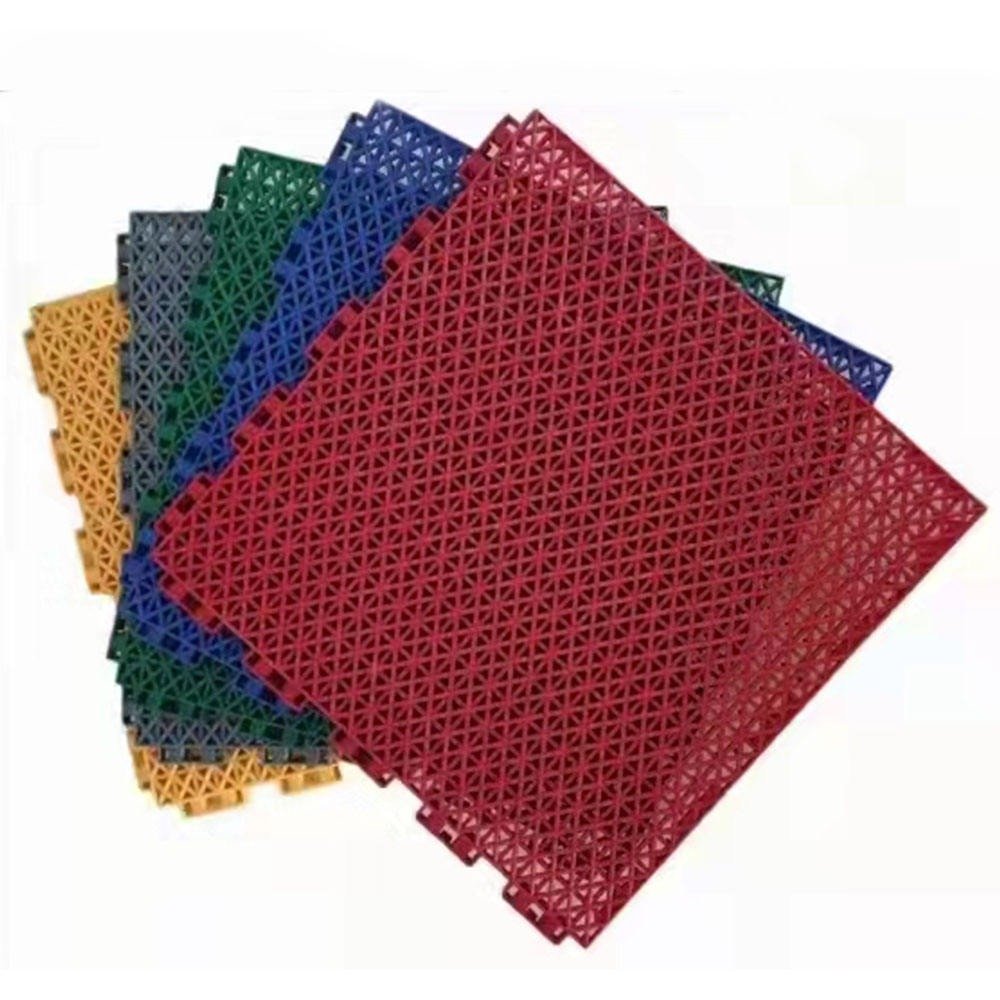
The installation phase has long been a bottleneck in project timelines. The industry is seeing a strong trend toward “loose-lay” and “click-lock” systems that do not require heavy adhesives, reducing installation time and labor costs. However, for traditional glue-down systems, the evolution of sports floor tape has been remarkable.
Today’s high-performance tapes are engineered to bond instantly with the backing of the floor, eliminating the need for heavy rollers and long curing times. These tapes feature aggressive acrylic adhesives that perform on porous and non-porous subfloors alike. For sports floor mats, we are seeing the rise of interlocking tile systems with built-in shock pads, which can be snapped together in hours rather than days, making them ideal for temporary venues and multi-use arenas that need to convert between different sports configurations frequently.
5. The Digital Supply Chain: Transparency and Speed
In the current global economy, being a great manufacturer is not enough; you must also be a great logistician. Customers are no longer just asking for a quote; they are asking for a digital twin—a simulated view of their order moving through the factory floor, the shipping container, and customs.
To support this, manufacturers are integrating their Enterprise Resource Planning (ERP) systems with customer portals. This allows clients to track their batch of sports flooring in real-time. This transparency is especially crucial for large-scale projects, such as university sports complexes, where a delay in the floor delivery impacts the entire construction timeline. A responsible sports flooring company anticipates these bottlenecks, sourcing raw materials from multiple regions to hedge against geopolitical disruptions, ensuring that price stability is maintained regardless of market volatility.
Looking Ahead: The Next Five Years
As we look toward 2030, the industry will likely see a convergence of these trends. We will see “smart” floors that can change color or display court lines via embedded LEDs, eliminating the need for physical tape. We will also see the widespread adoption of carbon-negative materials, where the production process captures more CO2 than it emits. These innovations will be driven by consumer demand for environmentally responsible products and by the increasing professionalization of sports at the grassroots level.
However, the core challenge remains: balancing the cost of innovation with market affordability. Manufacturers that can scale these new technologies will dominate the next decade. For the buyer, this means choosing a partner who not only has the production capacity but also the R&D vision to future-proof their investment.
Company Introduction
Navigating these complex trends requires a partner with deep roots in the industry and a forward-looking approach. This is the foundation upon which RunsureFloor has built its reputation.
For many years, RunsureFloor has been at the forefront of the sports flooring industry. Our state-of-the-art production facilities consistently ensure product quality, while our experienced team provides unparalleled technical support. We have extensive global export experience and a strong market position in Asia, Europe, and the Americas.
We understand that technical innovation must be matched by operational excellence. Our rigorous quality control processes ensure that every batch of sports flooring meets the highest international standards, whether it is for a professional basketball court or a local school gymnasium. We work closely with our customers to ensure timely delivery and price stability, placing customer needs above market trends. From custom-colored sports floor mats to heavy-duty sports floor tape and specialized formulations for the sports floor Middle East region, we offer comprehensive solutions. Our commitment to customer satisfaction is reflected in our long-term partnerships with our clients, such as our decade-long collaboration with one of the world’s largest companies. At RunsureFloor, we don’t just manufacture surfaces; we engineer the foundation for athletic excellence.